-
A Brief History of “Great Books”

Talia Boylan If you find yourself tasked with teaching a Great Books class (and if you have a Classics PhD, the odds that this will happen at some point in your career are relatively high), you might find yourself wondering where the idea for such a class came from in the first instance. The following…
-
Teaching With Shelmerdine, Introduction to Latin (Draft)
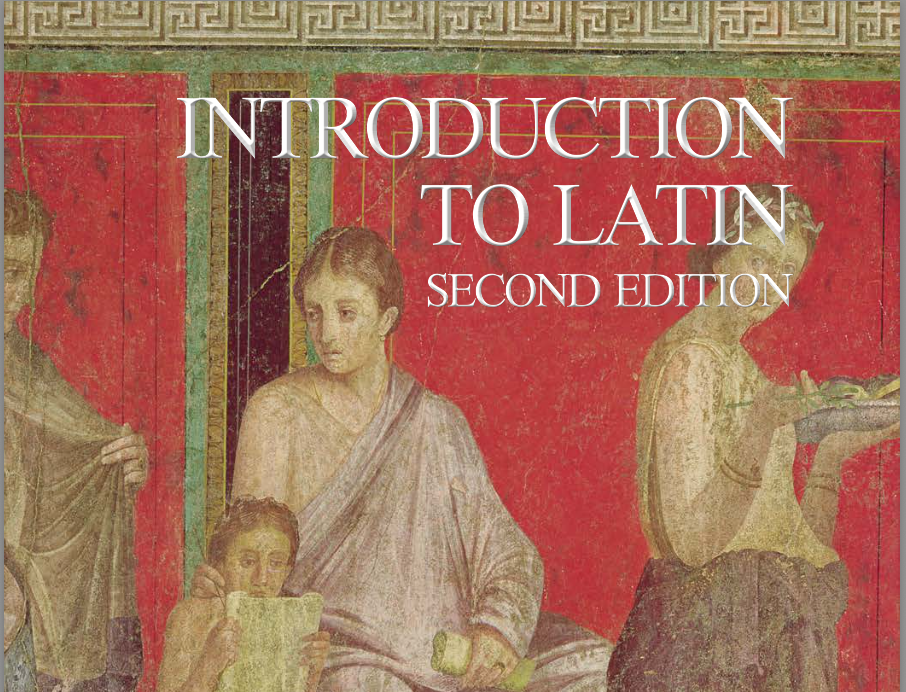
Kirsten Traudt Susan C. Shelmerdine’s Introduction to Latin: Second Edition provides a (mostly) full introduction to Latin which is aimed at students with little or no previous background in the language. Although it’s a “grammar-translation” style textbook, it also includes short readings adapted from Classical poetry and prose. Readings in the early chapters primarily discuss…
-
Advice for New Teachers in the Yale Program

Some basics to keep in mind when teaching GREK and LATN at Yale. Drafted August 17, 2025. Before the Start of the Semester • The LPD will place book orders for you, and the Registrar will order your desk copy. If they have not arrived when you need them, let us know. • Familiarize yourself…
-
A Brief History of Teaching Ancient Greek and Latin (Draft)

James F. Patterson A teacher should know not just how a topic is taught but why the topic is taught that way. It is therefore worth learning a bit about the history of teaching Ancient Greek (hereafter simply Greek unless otherwise qualified) and Latin. A classics scholar should find this unsurprising. Arguments today about the…
-
How Prepared are In-Coming Freshman for Intermediate Latin?

By Joseph Meyer, Glastonbury High School, CT Esteemed Teaching Assistant! Picture it with me, if you will. It is the night before the first day of classes. You have picked out your most professorial outfit, maybe even something with elbow patches, or – for the more adventurous – billowy pirate sleeves. More importantly, you have…
-
Improving the Perseus Vocabulary Generator (Greek)

Perseus Tufts has a terrific lemmatizer, a program that parses words in a text and organizes each of those unique words into an ordered list. The actual dictionary system and repeated words that the lemmatizer provides, however, makes the lists it produces practically unusable for students who want to upload the vocabulary list into a…
-
The Classroom Power Dynamic

Disclaimer: Power dynamics in an academic setting impact different people in different ways. Though I attempt to approach this topic from a place of empathy, at the end of the day I am still Dr. White Male and as such I also approach it from a position of privilege. I’ve done my best to take…
-
The Flow

It’s not difficult to argue that the biggest initial hurdle that native speakers of English have to overcome when learning Latin or Greek is the case system. In my experience, the most common problem-areas are: (1) English, of course, does not (99.999% of the time) use case, so the concept is entirely unfamiliar; (2) formal…
-
Repetition with Modification

When practicing new grammar, it is best to work with sentences that isolate that grammar with minimal distraction from, e.g., new vocabulary or other complicated grammar. Textbooks often do not adequately isolate the new grammar in their practice sentences, thus dividing the student’s attention. When our students complete a lesson, we want them to incorporate…
-
Disabilities and Accommodations

Let’s start with the big picture. On average (at least at my current university), 10% of students have an academic disability and need accommodations. And that is surely not all the students who would benefit from them; in my first year of teaching full-time, I had discussions with four separate students who, for various reasons,…
-
Subscribe
Subscribed
Already have a WordPress.com account? Log in now.
 Classics Teaching