
For a field like Classics, where enrollments sometimes determine whether we have jobs or not, and those numbers are perpetually on the fence, advertising is critical. We spend most of our effort—percentage-wise, too much, I think—preaching to the choir-adjacent, namely to students in History, English, etc. We should absolutely keep doing this, but our efforts really need to expand e.g. to the Sciences.
For one, there will equally be students in the Sciences who took some high school Latin and might like to continue, just as there are in the Humanities. Secondly, those students tend to appreciate “the logic of language” which we teach even more than students of the Humanities. We do ourselves a disservice by not advertising there.
How to advertise? Old-school methods still go a long way:
• If you are teaching something about, say, mythology, tell the class, “if you’re interested in this, take our mythology course next semester.” Don’t assume the students know what courses we offer.
• When registration comes around, let the students know in class and on Canvas what courses we will offer and why your students might be interested in them. And if you are teaching a course that non-majors may be interested in, make a flyer and give it to intro courses to distribute. We won’t know what to advertise if you don’t tell us.
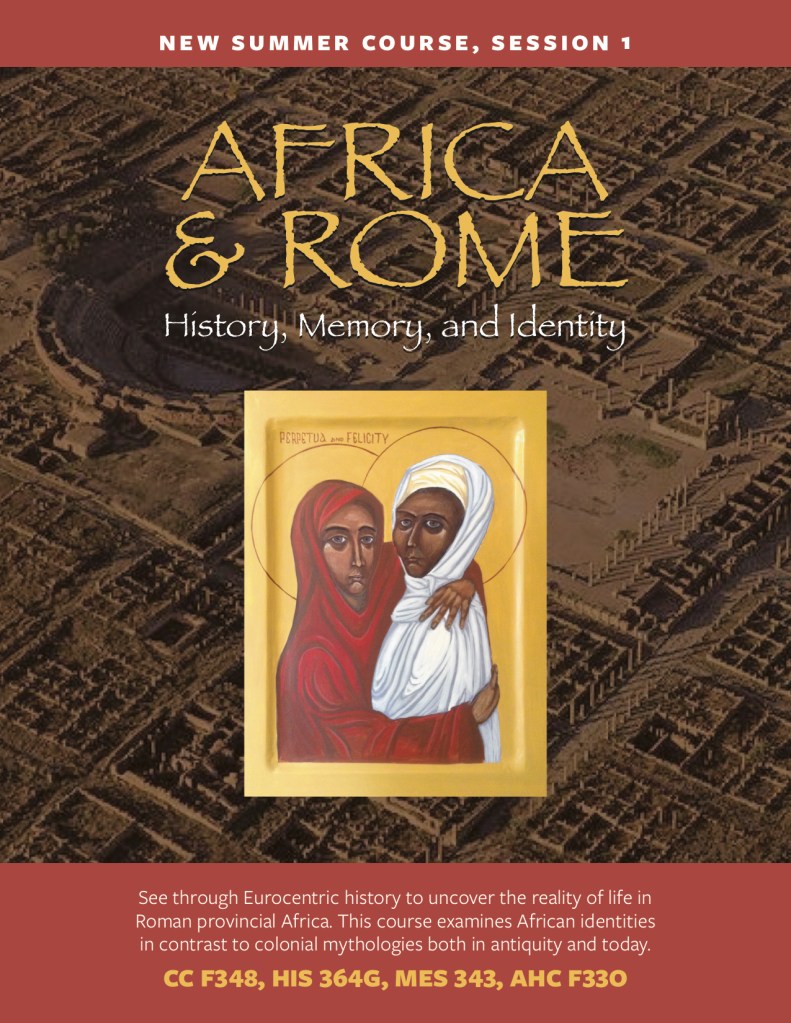
• Speaking of flyers, make them and post them. A nicely designed flyer posted in an unconventional place can result in an additional student in your course, who might be the reason your course ends up making.
• Use your syllabus’ Course Description as an opportunity to advertise, not to your current students but to potential students who might happen upon your syllabus in the future. Your course description should speak to students who are not already in-the-know. Majors will take your course no matter what you say. What about, say, the Physics major wandering the course catalogue? Speak to that student.
But we should think of other forms of outreach as well, like:
• Students will take a class if they think it is practical. Can we get advisors in other departments to tell students to take Greek or Latin?
• To pique the interest of non-majors, can we offer a Classics themed campus tour (like this one, for instance) directed at non-specialists? Think outside the box about what we can offer the community. Among other things, access to history of your campus through inscriptions and Classics-inspired art.
• Think about “the pipeline”—pre-collegiate students whom we expose to the Classics and who end up taking Classics courses when they get to college. At a state institution, this is a directly (though not immediately) relevant form of advertisement, for you may end up getting a current high school student in your class in a few years from now. This is not so for an institution like Yale in New Haven. Still, as a discipline we benefit if that New Havener ends up filling a seat at an institution elsewhere. So (town/gown issues asside) it’s just as important in an institution like ours that we engage with our local community, even if those students won’t likely come to us directly.
Some more canonical Greek and Latin flyers:


Some less canonical Greek and Latin flyers:


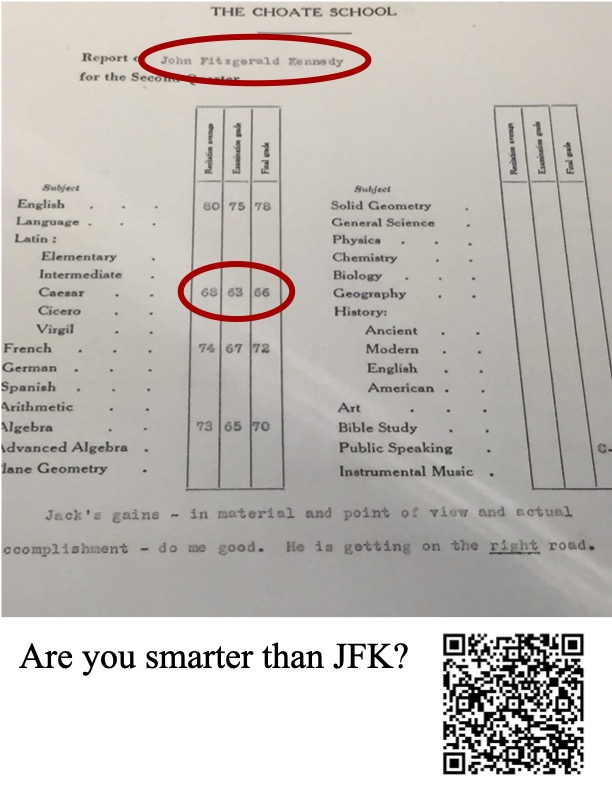
Some flyers for courses in translation:
—James F. Patterson, 12/23
 Classics Teaching