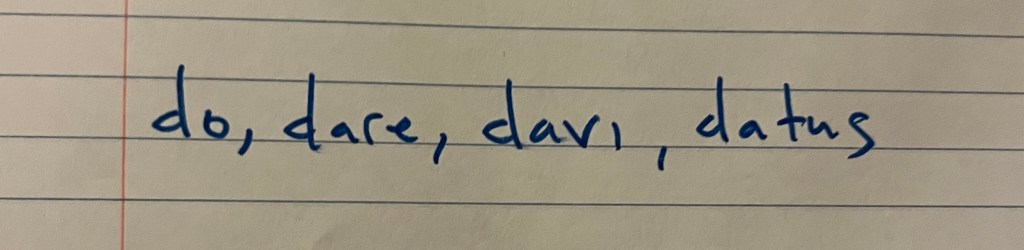
A “correct mistake” is an error that occurs when predicting morphology, correctly using the rules of that language, yet producing a form that happens not to be the preferred form in the target dialect—or the textbook used. For instance, forms of κακώτερος appear six time in Homer, though according to your textbook this is not the comparative of κακός.
Congratulate students who produce correct mistakes, then tell them what the expected form is, and why.
When it comes to do, dare, davi, who am I to say that davi is “wrong”? According to all Latin grammars, yes, it is. But I’m not a native ancient Latin speaker, so who am I to decide?
—James F. Patterson
 Classics Teaching